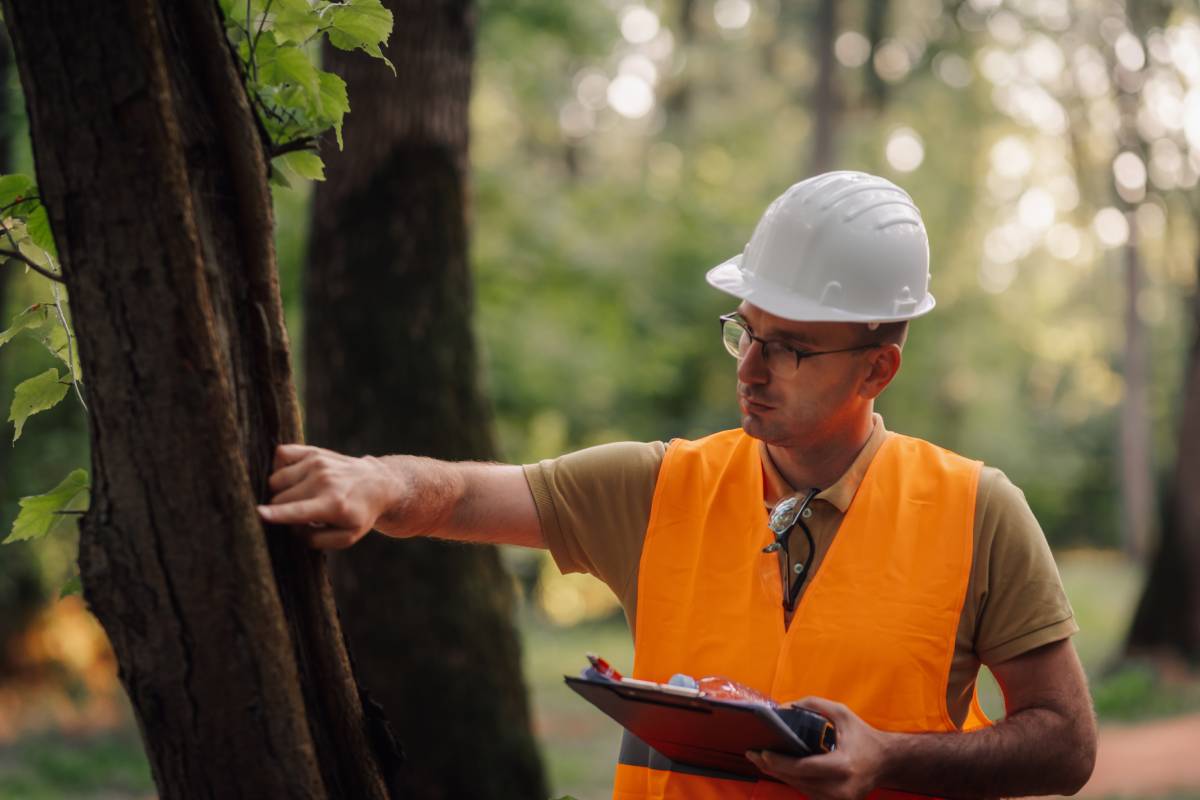
A tree in your yard is leaning after the last storm, and you need someone out there fast. You search online, and two types of services appear: a tree arborist and a tree cutter. They both use chainsaws. They both deal with trees. The price difference, however, can be significant, and so can the legal and safety consequences of picking the wrong one.
In Australia, anyone who owns a chainsaw can advertise themselves as an arborist and begin removing or pruning trees because, unlike plumbing or electrical work, tree work is largely unregulated at the state level. That creates a marketplace full of misleading titles and real financial risk for homeowners who do not know the difference.
This guide will show you exactly what separates a qualified tree arborist from a tree cutter, which situations require which professional, and what to check before you hand over a cent.
What Is a Tree Arborist?
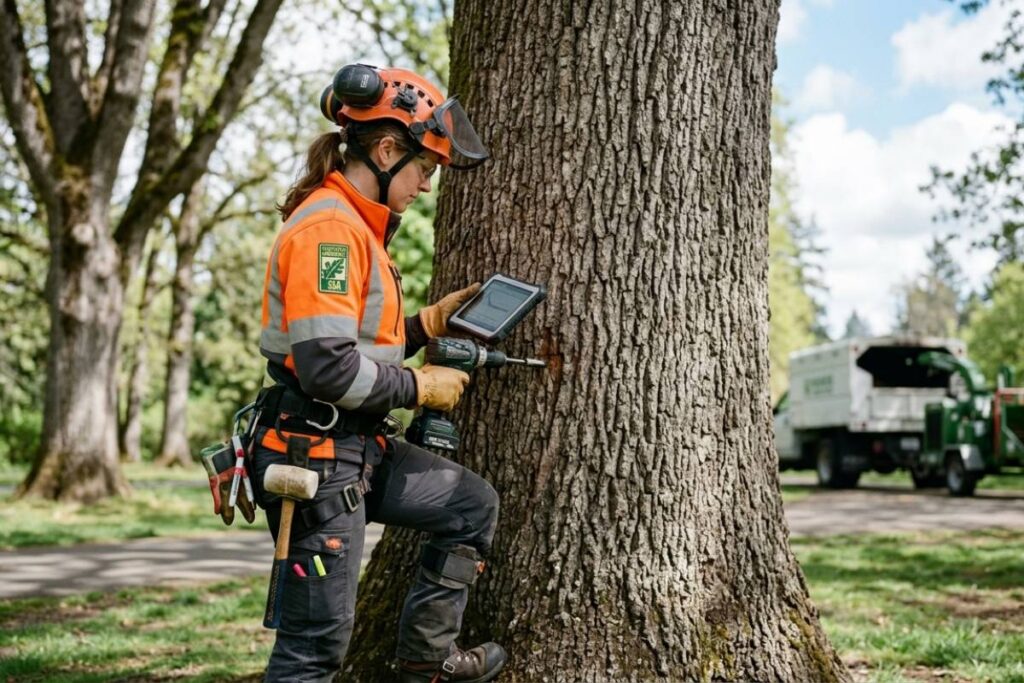
A tree arborist is a trained specialist in the cultivation, management, and science of individual trees, shrubs, and woody plants. The foundation qualification in Australia is a Certificate III in Arboriculture (AHC30824), which covers tree biology, hazard assessment, rigging, pruning, and removal under work health and safety standards.
An arborist is a professional in the tree industry who has completed their AQF Level 3 qualifications in horticulture or arboriculture. With the knowledge acquired from this study and experience in the field, they work to preserve healthy trees and remove dangerous ones.
Senior arborists hold a Diploma of Arboriculture (AHC50524), which qualifies them to conduct formal tree risk assessments, write arborist reports for council submissions, and consult on complex tree management in urban or construction environments.
What a Tree Arborist Can Do
A qualified tree arborist provides a full spectrum of tree care services:
- Tree health assessment: Diagnosing disease, root damage, fungal infection, and structural defects
- Tree risk assessment: Evaluating the likelihood and consequence of tree failure near people or property
- Pruning and crown management: Removing dead wood, shaping canopy, and improving tree structure using industry-standard pruning techniques
- Tree removal: Safe dismantling of trees in confined spaces using rigging systems
- Arborist reports: Formal documentation required by councils for development applications or tree removal permits
- Cabling and bracing: Installing structural supports to extend the life of a compromised tree
- Pest and disease treatment: Applying approved treatments for insect infestations and fungal conditions
- Planting advice: Selecting and positioning species suited to site conditions
What Is a Tree Cutter?
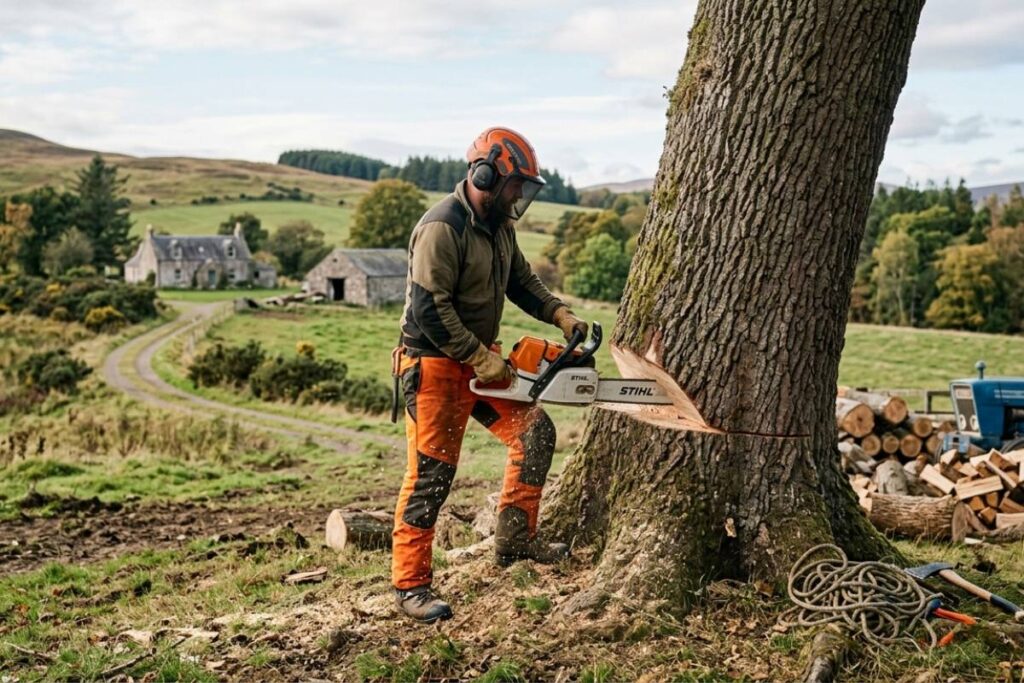
A tree cutter, also called a tree lopper, is a general labourer who performs physical cutting work on trees. They are not required to hold any formal arboricultural qualification, though a responsible operator will hold at minimum a chainsaw safety certification and basic first aid.
Tree cutters typically handle felling, lopping, and debris clearing in open or rural settings where tree health, structural analysis, or council compliance is not a factor. Their value lies in the speed and cost of physical labour, not in diagnostic expertise.
The term “tree lopper” is sometimes used interchangeably with “tree arborist” by businesses trying to attract customers, which creates genuine confusion for homeowners. Lopping, in the professional sense, is actually considered poor practice by qualified arborists because it leaves large wounds that invite disease and decay.
Side-by-Side Comparison
| Feature | Tree Arborist | Tree Cutter / Lopper |
| Formal qualification | Certificate III or Diploma of Arboriculture | No minimum requirement |
| Tree health diagnosis | Yes | No |
| Arborist report for council | Yes (Diploma level) | No |
| Tree risk assessment | Yes | No |
| Structural pruning | Yes, to industry standards | Basic cutting only |
| Tree removal in confined areas | Yes, with rigging systems | Limited |
| Insurance | Professional indemnity + public liability | Public liability only (if held) |
| Pest and disease treatment | Yes | No |
| Suitable for heritage/protected trees | Yes | No |
| Average cost (Australia) | Higher | Lower |
When You Need a Tree Arborist
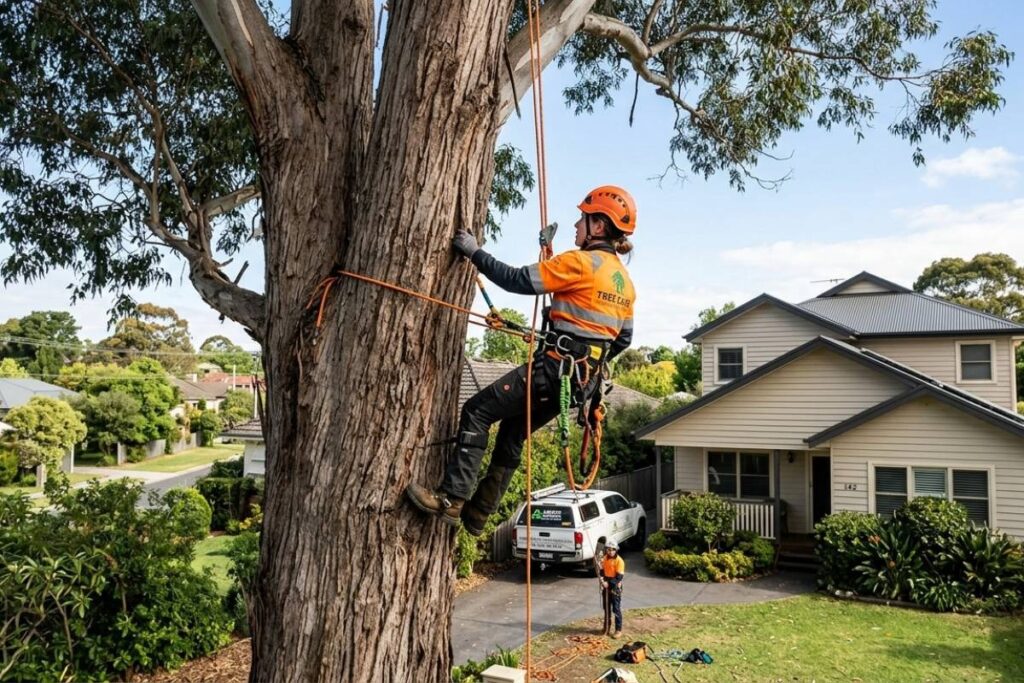
The Tree Is Near a Structure
Any tree within falling distance of your home, fence, power line, or neighbouring property requires a professional assessment before anyone starts cutting. Only an arborist should be trusted to perform these services as they have the necessary skills, qualifications, insurance and experience to do so accurately, safely and with a professional arborist report.
An unqualified tree cutter working near a structure without a risk assessment creates a liability problem for both the operator and the property owner if something goes wrong.
You Need a Council Permit
Most Australian councils require an arborist report before approving a tree removal permit, especially for trees above a certain height, girth, or those listed as significant or heritage species. Councils increasingly insist on a Diploma level to approve removal applications. A tree cutter cannot produce that report. Hiring one without first securing council approval can result in fines running into thousands of dollars.
State and council tree removal regulations vary significantly across Australia, which is why the arborist you hire must be familiar with the specific rules governing your local government area.
The Tree Is Diseased or Structurally Compromised
A leaning tree or one shedding bark may look like a simple removal job, but the cause matters. Root rot, crown rot, and internal decay can change how a tree falls and whether removal is even the right decision. For health assessments, untrained, uncertified tree workers may not notice important signs of deterioration in a tree. This sort of mistake can lead to incorrect assessments that result in trees being removed that shouldn’t be, or dangerous trees left standing.
The Tree Is Protected or Significant
Heritage-listed trees, trees protected under council or state vegetation management legislation, and trees on or near boundaries with neighbours all require qualified professional involvement. Getting this wrong can lead to legal action and restoration orders, not just fines.
You Are in a Development or Construction Zone
Construction projects near tree root zones require Tree Protection Plans prepared by a consulting arborist. Builders and developers routinely need formal arborist reports to satisfy development approval conditions.
When a Tree Cutter Is Sufficient
A tree cutter is the practical choice in a narrow set of circumstances:
Rural or acreage land clearing
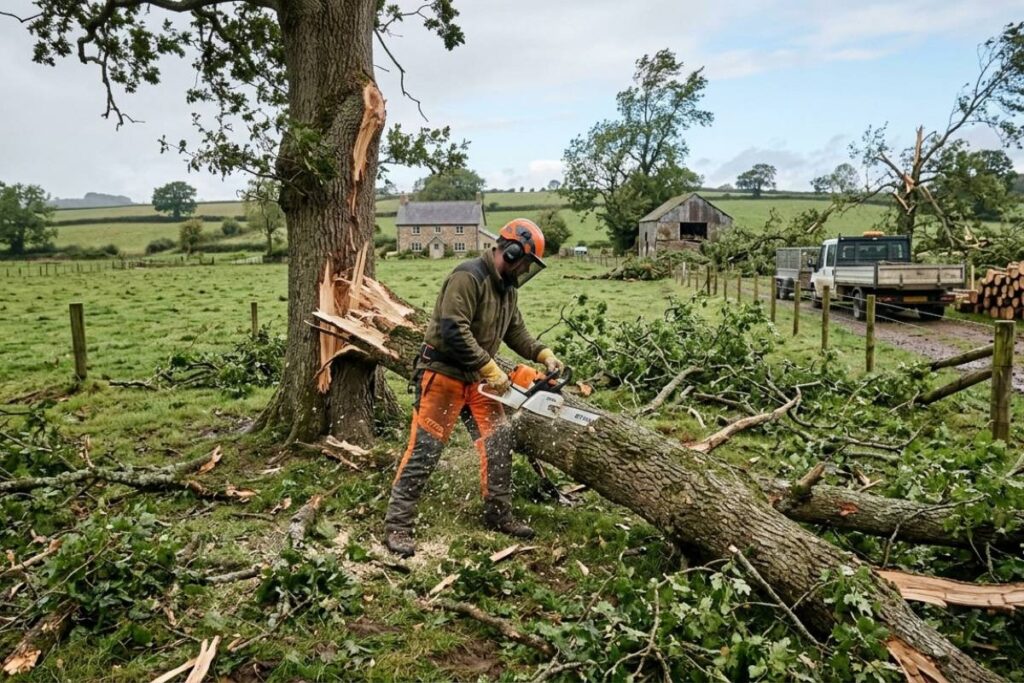
When felling trees on open land away from structures, power lines, or neighbours, and no permits are required, a competent tree cutter with a chainsaw licence can perform the work efficiently and at a lower cost.
Storm debris clearing
After a storm event, much of the work involves removing already-fallen branches and debris. This is physical clearing, not tree assessment, and a tree cutter can handle it.
Simple rural fence-line clearing
Removing scrub or small saplings that pose no structural risk and require no council approval.
If your situation ticks any of these boxes, the qualification gap matters less. But if there is any doubt about the tree’s proximity to property, its health, or its protected status, hire the arborist first.
For jobs that do qualify as simple rural clearing, working through a checklist for hiring a tree cutter helps confirm the operator holds the minimum certifications and insurance before any work starts.
Qualifications to Check Before You Hire
The absence of regulation in Australia’s tree industry puts the verification burden on the property owner. Here is what to ask for before any work begins.
For a Tree Arborist
- Certificate III in Arboriculture (AHC30824): the minimum for practical tree work
- Diploma of Arboriculture (AHC50524): required for arborist reports and council submissions
- Arboriculture Australia membership: Registered Practising Arborist (RPA) or Registered Consulting Arborist (RCA) designation confirms active industry standing and insurance requirements
- Public liability insurance: minimum $10 million recommended
- Professional indemnity insurance: required for consulting work and arborist reports
For Any Tree Worker
- Chainsaw operator certification: confirms safe chainsaw use
- Working at heights and aerial rescue ticket: required for any climbing work
- Elevated Work Platform (EWP) licence: if machinery is used
Although there is no government-issued arborist licence required by federal or state law simply to cut or remove trees, qualifications and accreditations are widely expected by employers, councils, and clients, and in many cases required before you can do certain work or provide official reports.
The Legal Risk You May Not Know About
Tree work sits in Australia’s highest-risk industry category. The agriculture, forestry and fishing industry had the highest worker fatality rate in Australia at 9.2 deaths per 100,000 workers, according to Safe Work Australia’s Key Work Health and Safety Statistics Australia 2024 report. This is not abstract data: it means that when something goes wrong in a tree job, the consequences are severe.
If an uninsured or unqualified operator injures themselves on your property, you may bear legal and financial responsibility. If a tree falls on a neighbour’s property after you engaged someone who provided no formal risk assessment, your liability exposure increases significantly.
Beyond personal injury, removing a protected tree without council approval carries heavy penalties. Fines vary by council and state, but they regularly reach tens of thousands of dollars, and some orders require replacement planting at your expense.
Before any cutting begins, it is worth understanding the rules around tree removal laws on private property in Australia, because council restrictions apply regardless of which professional you hire.
How to Choose the Right Professional
Work through these four questions before making a booking:
1. Is council approval needed?
Check your local council’s tree preservation policy. Most councils have online mapping tools that identify protected trees. If approval is needed, you need a qualified arborist who can produce a formal report.
2. Is the tree near a structure, power line, or boundary?
If yes, a qualified arborist with public liability and professional indemnity insurance is not optional. The risk profile demands it.
3. What is the tree’s condition?
If you cannot identify whether the tree is healthy or compromised, you need an arborist assessment before making any cutting decision. An assessment may cost a few hundred dollars. A fallen tree on a neighbour’s roof costs far more.
4. Is the job purely physical clearing on open land?
If all of the above are ruled out, and the job is mechanical felling or debris removal on rural land with no structural, health, or legal complexity, a competent tree cutter with appropriate chainsaw certification and liability insurance can do the job.
Use the Arboriculture Australia directory (trees.org.au) to find verified Registered Practising Arborists in your area. Cross-check their certificate numbers and confirm their insurance is current before any work begins.
Conclusion
A tree arborist and a tree cutter are not interchangeable, and choosing the wrong one carries real financial, legal, and safety consequences in Australia. For anything involving a structure, a council permit, a diseased or protected tree, or a confined working space, a qualified tree arborist is the only appropriate choice. Reserve a tree cutter for simple, low-risk clearing on open land where no permits, assessments, or formal reports are required.