Why Most Office Fitouts Get It Wrong
Your office fitout is finished. The benchtops look great, the brand palette is consistent, and the furniture arrived on time. Six months later, your team is reporting back pain, focus problems, and two of your best people have quietly started job hunting.
Most fitouts optimise for appearance and cost-per-square-metre. The problem is that neither metric captures what your office actually produces: human performance. When physical discomfort chips away at concentration, focus drops, errors rise, and your investment in talent begins to leak. The fix is not a bigger budget. It is a different set of priorities from the planning stage.
The Business Case for Ergonomic Investment
A study by DeRango et al. (2003) found that well-designed ergonomic interventions combining highly adjustable chairs with proper training can increase productivity by 17.5%. This gain compounds across roles and directly impacts overall organisational output.
That gain does not come from a single chair upgrade. It comes from systematically removing the physical friction that prevents people from doing their best work. Every time an employee adjusts their posture, rubs their eyes, or shifts uncomfortably in a poorly configured seat, valuable cognitive bandwidth is diverted away from the task at hand.
Companies investing in comprehensive ergonomic solutions have also seen significant reductions in absenteeism related to musculoskeletal disorders. Fewer sick days translate to more consistent output, reduced workload on remaining team members, and lower indirect costs from project delays.
The retention argument is equally compelling. According to a Fellowes Workplace Wellness Trend Report, 87% of workers would like their employer to offer a healthier, more ergonomic workspace. In today’s competitive labour market, ergonomic fit-out decisions can strongly influence whether top candidates accept offers and whether employees choose to stay long-term.
Core Ergonomic Elements Every Fitout Needs
Adjustable Furniture: Beyond the Standing Desk
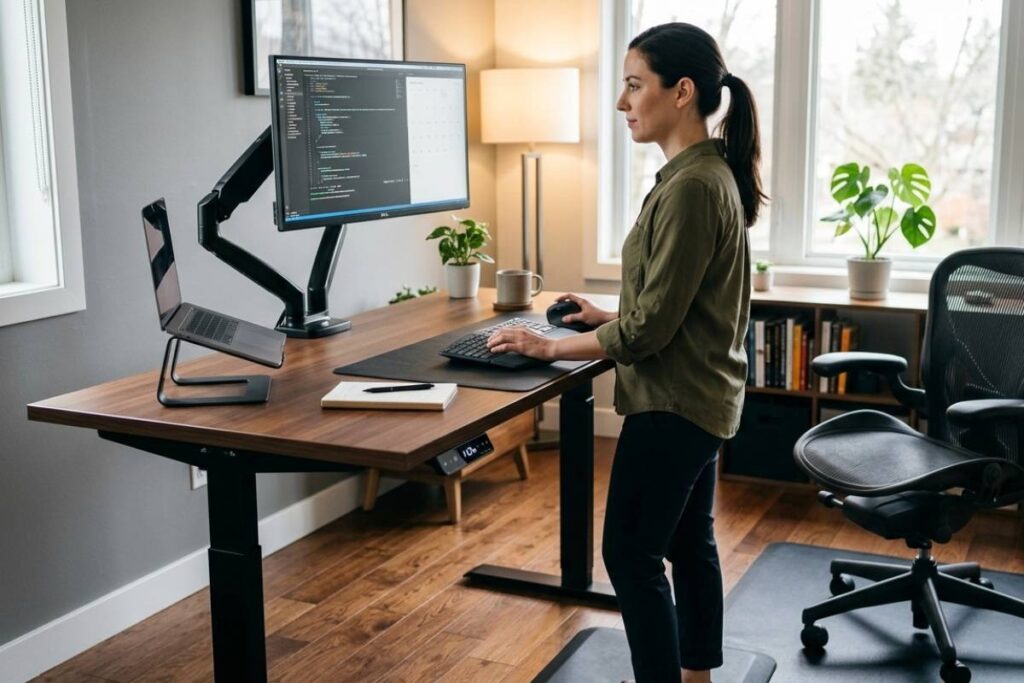
Sit-stand desks have become the headline product of ergonomic fitouts, and for good reason. Research shows employees using height-adjustable sit-stand desks are 45% more productive than those at traditional seated workstations. The mechanism is straightforward: alternating between postures reduces cumulative muscle fatigue and maintains circulation.
The desk is only part of the system. A height-adjustable desk paired with a fixed chair negates most of the benefit. The chair needs lumbar support that adjusts to the individual, armrests that allow shoulders to sit naturally relaxed, and seat depth that supports the full thigh without cutting off circulation at the knee.
Monitor arms are frequently skipped in fitout budgets and are frequently regretted. A screen that cannot be repositioned forces the neck to adapt to the monitor rather than the monitor to the person. Working at a screen positioned too low can place up to 400% more force on the spine than correct positioning a substantial load accumulated across an eight-hour day.
Lighting: The Most Underestimated Factor
Lighting is the ergonomic variable most often sacrificed to architectural aesthetics. Recessed ambient lighting looks clean in renders. It often produces flat, uniform illumination that generates glare on screens and triggers eye strain within hours of desk work.
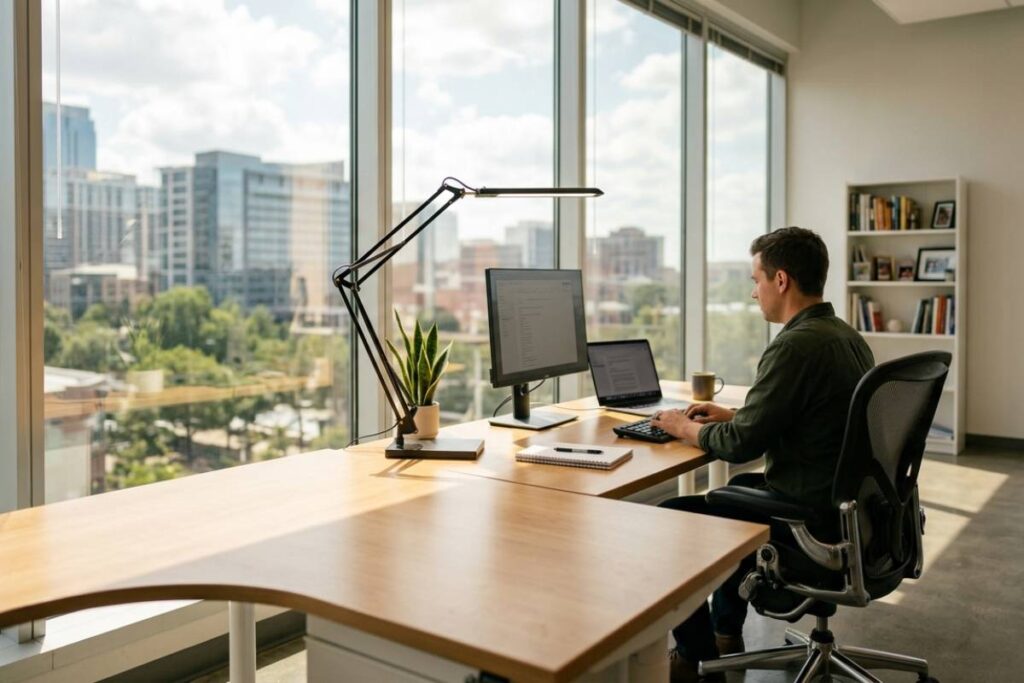
Research shows 47% of employees in workplaces with only artificial lighting report higher rates of eyestrain and fatigue. The solution combines three layers: ambient light to set a base level, task lighting adjustable at each workstation, and access to natural daylight wherever the floor plan allows.
Colour temperature matters too. Lighting in the 4,000–5,000 Kelvin range supports alertness during core working hours. Warmer tones in breakout or collaborative zones signal a shift in cognitive mode, which helps with transitions between focused and social work.
Acoustics and Cognitive Performance
Open-plan offices became the default fitout format on the assumption that proximity drives collaboration. The research tells a more complicated story. Uncontrolled noise is one of the most consistent predictors of reduced concentration and increased error rates in knowledge work environments.
Acoustic panels, sound-masking systems, and zoned floor plans that separate focus areas from collaborative spaces are not aesthetic choices. They are functional infrastructure. Phone booths and quiet rooms give employees agency over their acoustic environment, which reduces the physiological stress response that sustained noise exposure triggers.
Ceiling height, hard flooring, and glass partitions all amplify sound reverberation. A fitout that addresses these surfaces during construction is far cheaper than retrofitting acoustic treatments after staff have started complaining.
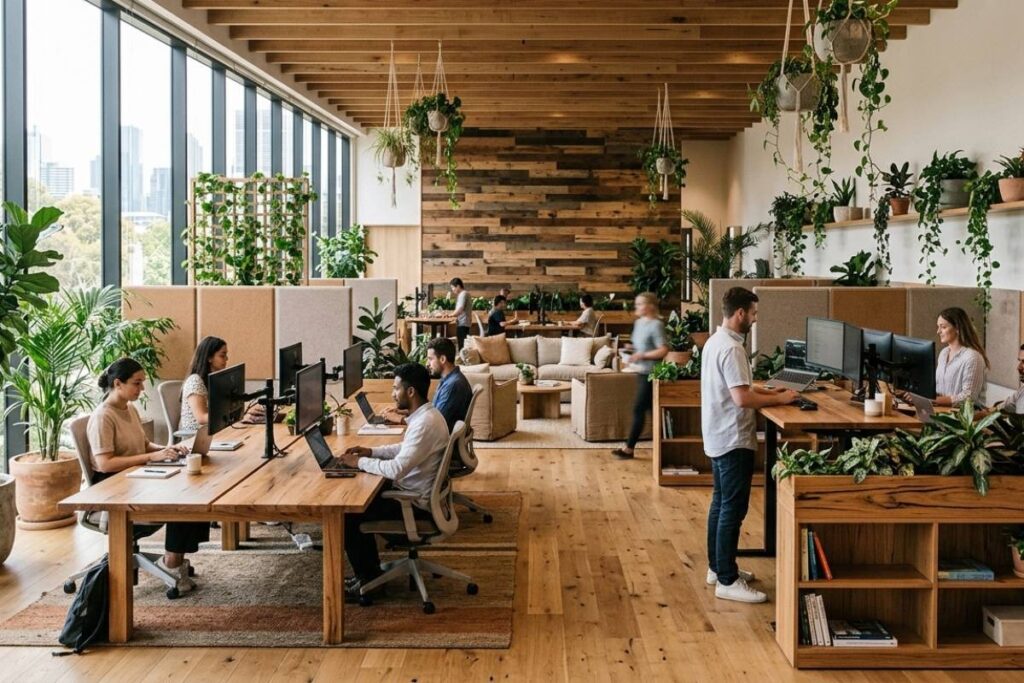
Biophilic Design and Mental Wellbeing
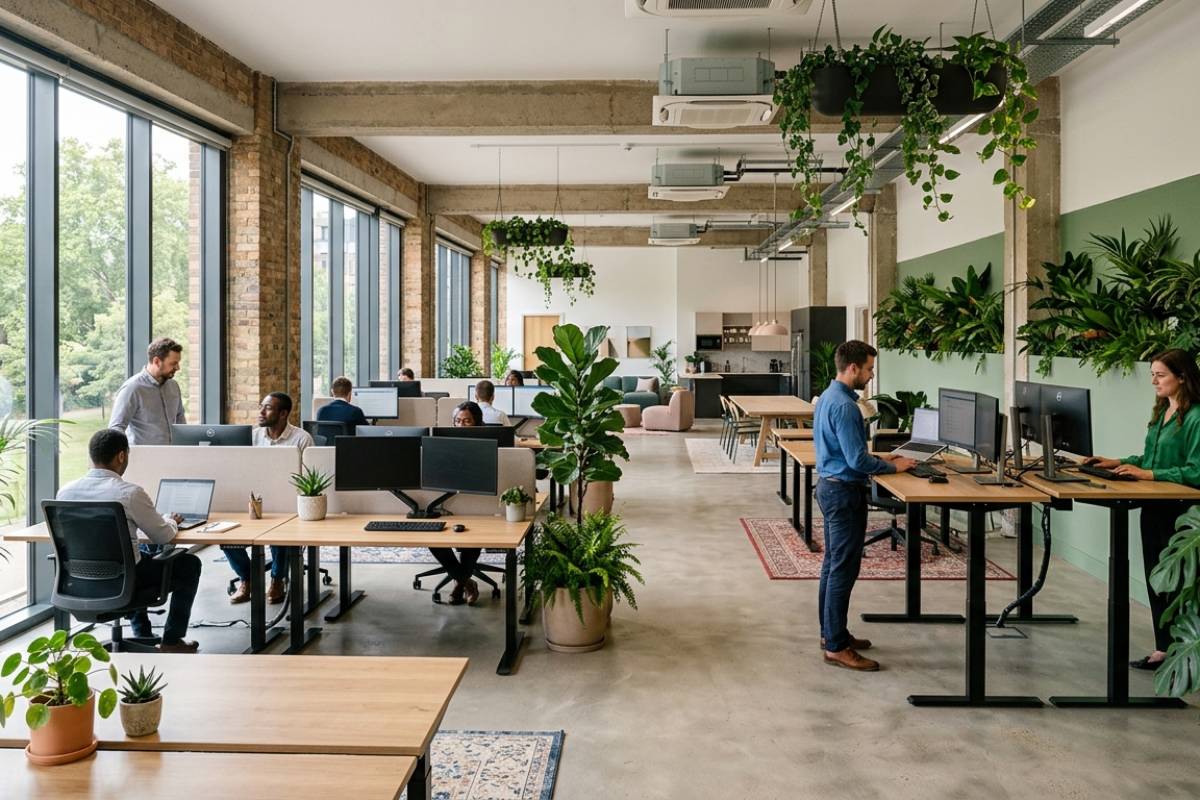
Biophilic design incorporates natural materials, plants, and views of the outdoors into the built environment. The wellbeing outcomes are measurable. Access to greenery and natural textures reduces cortisol, the primary physiological stress marker, and supports sustained attention across the working day.
Plants also play a practical air quality role in enclosed air-conditioned offices. Improved air quality directly correlates with reduced headaches and fatigue, two of the most common productivity complaints in modern office buildings.
Timber finishes, stone surfaces, and natural-fibre upholstery contribute to the same effect by reducing the visual coldness of purely synthetic environments. These choices carry a cost premium but often occupy the same line item as decorative finishes that deliver no functional return.
Ergonomic Fitout vs Standard Fitout
| Feature | Standard Fitout | Ergonomic Fitout |
| Desk type | Fixed-height bench | Height-adjustable sit-stand |
| Chair specification | Generic task chair | Adjustable lumbar, arm, and seat depth |
| Monitor positioning | Fixed desktop or laptop | Monitor arms, eye-level alignment |
| Lighting | Ambient ceiling only | Layered: ambient + task + natural |
| Acoustics | Open plan, minimal treatment | Zoned plan, panels, sound masking |
| Air quality | Standard HVAC | Biophilic elements, improved ventilation |
| Movement support | Desk only | Breakout zones, standing areas, informal seating |
| Wellbeing ROI | Low | Measurable: productivity, retention, absenteeism |
How to Prioritise Ergonomic Upgrades by Budget
Not every business enters a fitout with an unlimited scope. Prioritisation by impact-per-dollar matters. Businesses planning a refresh can cross-reference current small office fitout trends to see how ergonomic principles are already shaping layouts across Sydney workplaces.
Highest impact, lower cost: Monitor arms, external keyboards, and lumbar support cushions address the most common physical complaints immediately. These can be deployed across an existing fitout without structural changes.
Medium impact, medium cost: Acoustic panels and task lighting retrofits deliver measurable cognitive benefits and can be installed without disrupting workstation layouts. Zone-based acoustic treatment in a high-density floor plan typically produces the fastest visible improvement in reported focus.
For businesses outside Sydney, understanding what an office fitout budget realistically covers in Brisbane helps set expectations before ergonomic line items are added to the scope.
Highest impact, higher cost: Height-adjustable desks and quality ergonomic chairs are the core infrastructure of a wellbeing fitout. When the budget requires phasing, prioritise these for roles involving sustained desk work of six or more hours per day, and deploy across the full office in subsequent stages.
Space planning changes: Zoning a floor plan to separate focused work from collaborative activity does not always require construction. Furniture arrangement, screening, and signage can create functional acoustic zones within an existing shell before permanent partitions are considered.
Conclusion
An ergonomic office fitout is not a wellness trend. It is the design decision with the most direct line to the outcomes businesses already care about productivity, retention, and reduced health costs. By prioritising adjustable furniture, layered lighting, acoustic zoning, and biophilic elements, organisations build a workspace that sustains human performance rather than degrading it over time.