
The Sydney Morning Herald front page used to mean something specific. You picked it up at a newsagent’s, scanned the headline, and knew what Sydney was talking about that morning.
That ritual has fractured. For the first time in eleven years of surveying, social media (26%) has overtaken online news websites (23%) as Australians’ main source of news, according to the University of Canberra’s Digital News Report: Australia 2025. The SMH still exists. But the front page, as a concept, is no longer one thing in one place.
This guide maps the full landscape: what the Herald still does well, which platforms have filled the gaps, and how to build a trustworthy local news habit in 2026 without getting lost in the noise.
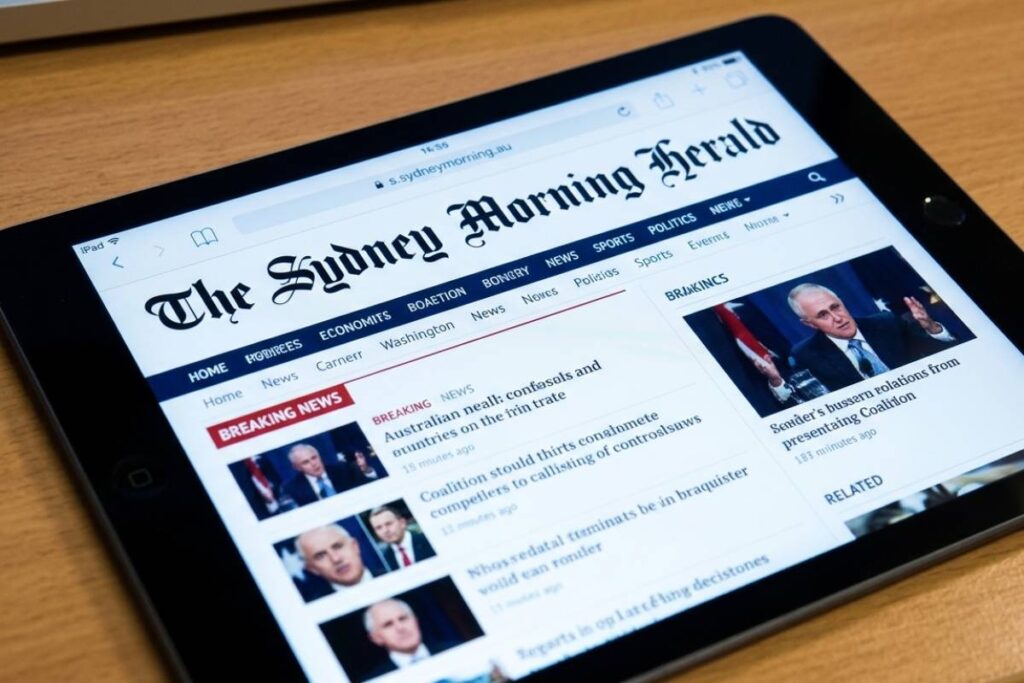
What the Sydney Morning Herald Front Page Still Offers
The SMH is not a relic. One in three Australians read the SMH, with 8.1 million readers across all platforms for the 12 months ending March 2025, making it the most read multi-platform masthead in the country.
Its front page, whether accessed via smh.com.au or the app, curates the day’s top NSW and national stories with editorial judgment that algorithms cannot fully replicate. The SMH employs specialists in politics, courts, business, and culture who source stories through primary reporting.
The print Saturday edition still draws 495,000 readers per issue, and the Monday-to-Friday print run averages 368,000. For a supposedly dying medium, those numbers remain significant.
What the Herald does best:
- Investigative and long-form reporting on NSW government and courts
- Real estate, business, and financial coverage for the Sydney market
- Curated opinion from Australian public figures
Where it falls short:
- Hyperlocal coverage (suburb-level news, council decisions, local events) is thin
- Paywalled content limits casual access
- Breaking news speed lags behind social-first outlets

The Platform Shift: How Australians Consume News in 2026
The numbers from the University of Canberra are stark. Television remains the most popular news source overall at 37%, but social media has overtaken traditional online news for the first time, with Facebook used by 38% of Australians to source news, alongside growing audiences on TikTok, X, and WhatsApp.
For younger Australians, the shift is even more pronounced. Instagram (40%) and TikTok (36%) are the top two news platforms for Australians aged 18-24.
This is not simply a preference for convenience. It reflects a structural change in how journalism is distributed. Traditional mastheads now publish across Facebook, Apple News, and Google News, so readers encounter SMH journalism without ever visiting smh.com.au.
Australia ranks globally as one of the countries with the highest interest in local news, alongside Finland and the USA, with 51% of Australians interested in local news, up six percentage points since 2020. Demand is high. The delivery mechanism has simply changed.
Top Local News Sources for Sydney and NSW
ABC News
The ABC is publicly funded and carries no paywalls. Its Sydney coverage spans politics, weather, crime, and community stories. The ABC News app sends breaking alerts and its radio feeds remain dominant during commuting hours. For local government and regional NSW stories, ABC Local Radio is unmatched.
The Daily Telegraph
The Tele targets a working-class Sydney readership and leads on crime, sport, and tabloid political coverage. It operates behind a News Corp paywall but surfaces prominently in Google News results. Its front page takes a more visceral, direct tone than the Herald.
9News and 7News Sydney
Both broadcast networks run active digital portals with fast-updating Sydney news feeds. They prioritise breaking crime, weather, and traffic stories. Neither does deep investigative work, but for “what happened today in Sydney,” both are reliable and free.
The Guardian Australia
Launched its Australian edition in 2013 with a focus on progressive political coverage, the environment, and social policy. It is free to read (reader-supported) and covers NSW politics with strong context.
Local and Suburban Outlets
This tier is where coverage is thinnest, and trust is highest. Publications like the Manly Daily, St George and Sutherland Shire Leader, and Cumberland/Courier cover councils, local crime, and community events. Local newspapers are used by 19% of Australians for local news, behind social media (25%) and TV (22%), though the closure of many local outlets has pushed audiences toward social media, particularly in regional areas.
National vs. Local: Understanding the Difference
Sydney readers often conflate national and local news. The SMH front page mixes both, which can obscure the distinction.
National news covers federal politics, economic indicators, and stories affecting all Australians. Local news covers your council’s development approvals, road closures, local crime rates, and neighbourhood services.
The type of local information Australians want most is local news stories, including crime and accidents (54%), followed by local information services such as bus timetables and weather (41%), and local activities and culture (36%).
The SMH covers the first category well. For the second and third, hyperlocal outlets, council websites, and community Facebook groups frequently outperform it. Readers searching for local Sydney events and services rarely find what they need on a national masthead, which is precisely why hyperlocal outlets fill a gap the Herald was never built to cover. Treating the Herald as a complete local news solution means missing the most granular layer of what is happening in your suburb.
Comparison Table: Major Australian News Sources at a Glance
| Source | Coverage Type | Paywall | Best For | Speed |
| Sydney Morning Herald | State/national, business, politics | Partial (metered) | In-depth NSW reporting | Medium |
| ABC News | National/local, public interest | Free | Breaking news, regional NSW | Fast |
| The Daily Telegraph | Sydney tabloid, sport, crime | Full (News Corp) | Crime, sport, populist politics | Fast |
| 9News Sydney | Broadcast/digital | Free | Breaking news, weather, traffic | Very fast |
| The Guardian Australia | National, politics, environment | Free (donations) | Policy, progressive commentary | Medium |
| The Australian | National broadsheet | Full paywall | Business, federal politics | Medium |
| Local suburban papers | Hyperlocal | Free/partial | Council news, community events | Slow |
| Facebook community groups | Hyperlocal, unverified | Free | Neighbourhood alerts, local tips | Very fast |
How to Build a Reliable Local News Diet
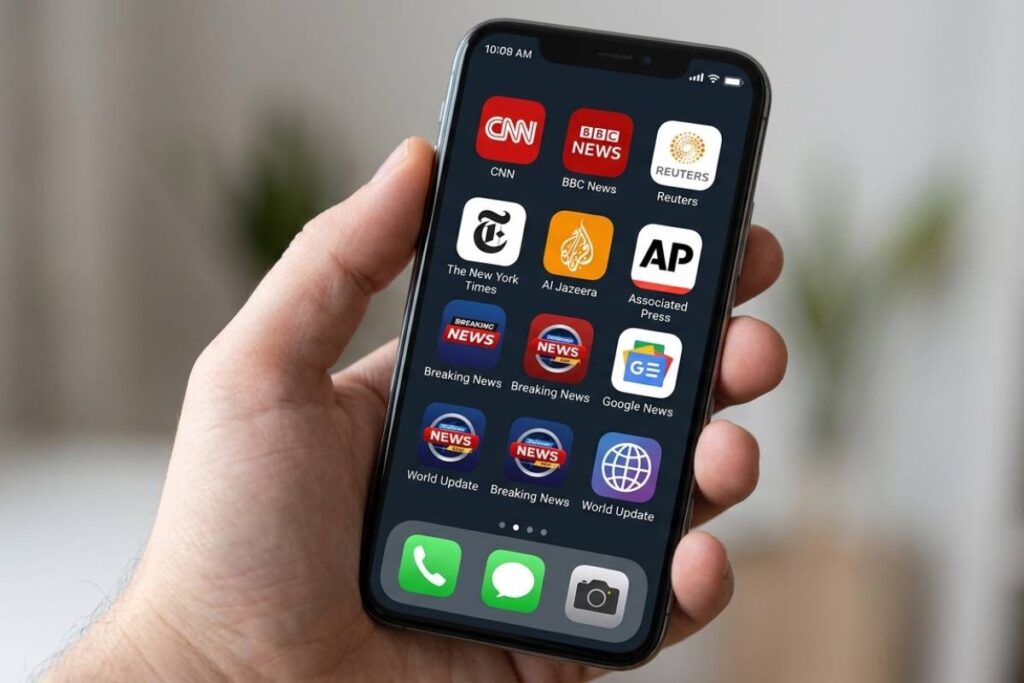
No single source covers everything. The most informed Sydney readers use a layered approach.
Layer 1: National context
Use the SMH, ABC News, or The Guardian for federal politics, business, and major NSW stories. Check once in the morning and once at midday.
Layer 2: Breaking updates
Turn on push alerts from the ABC News app or 9News for time-sensitive events like severe weather, major incidents, or breaking political news.
Layer 3: Hyperlocal
Subscribe to your local council’s newsletter and follow your suburb’s community Facebook group. Cross-check anything alarming against ABC Local Radio before sharing.
Layer 4: Verification habits.
74% of Australians are concerned about misinformation, the greatest concern of any of the 48 countries surveyed globally. Before sharing a story, confirm it appears on at least one traditional masthead or the ABC.
Avoid relying on TikTok or X as primary sources. Both surface fast, often unverified content. Use them to discover stories, then verify through established outlets before acting on the information.
Sydneysiders who structure their mornings around Sydney household routines tend to consume news most consistently, making a layered news habit a natural extension of an already organised day.
Conclusion
The Sydney Herald front page remains a credible and well-read starting point for NSW news, but it no longer defines how Australians consume local journalism. Social media has overtaken online news for the first time, hyperlocal outlets fill the neighbourhood gap that mastheads cannot, and a layered approach across ABC, the SMH, and local sources gives readers the most complete picture of what is happening in Sydney and beyond.