Why Hiring the Wrong Tree Service Is a Bigger Risk Than You Think
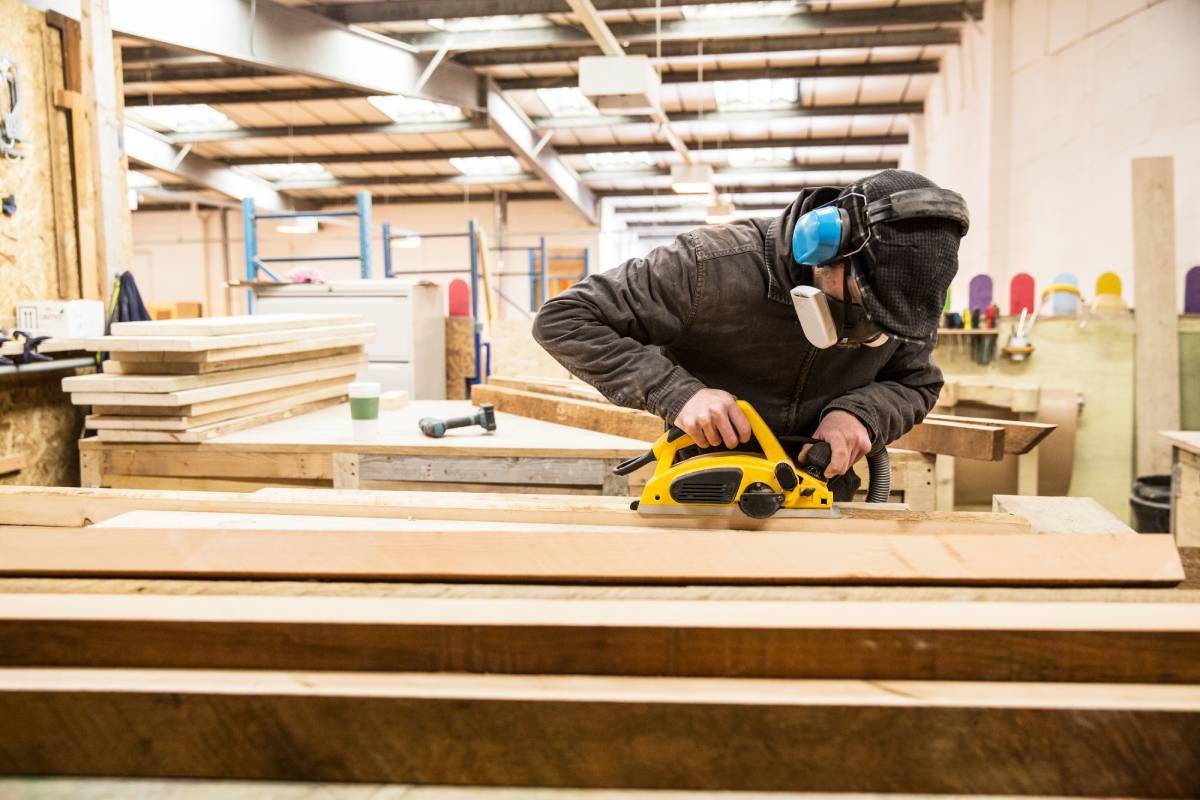
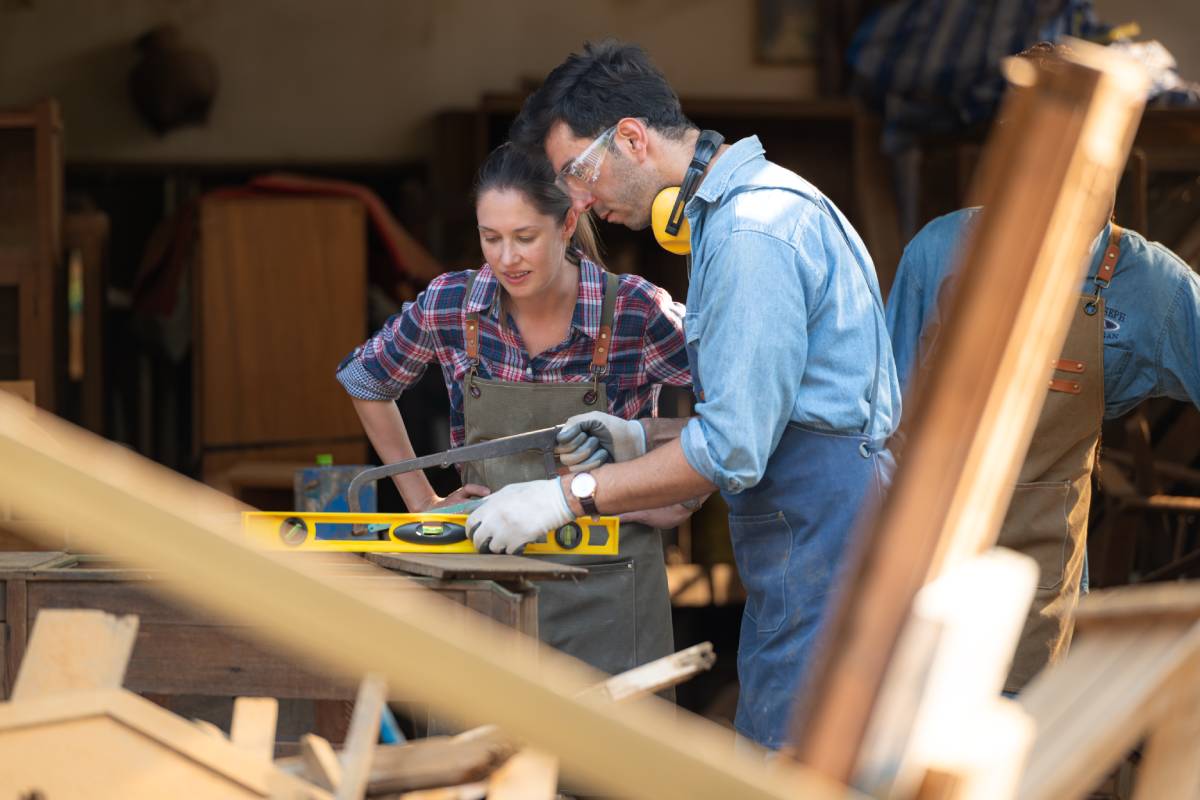
A chainsaw and a ute do not make someone a qualified arborist. In Australia, tree work sits in one of the most under-regulated service industries, and that gap creates real exposure for homeowners who do not know what to look for.
The Agriculture, Forestry and Fishing industry recorded the highest workplace fatality rate in Australia at 14.7 deaths per 100,000 workers, according to Safe Work Australia’s Key WHS Statistics report. Tree work falls squarely within this sector. An unqualified operator on your property increases the probability of injury, property damage, and a legal bill that lands squarely in your lap.
Beyond physical safety, the financial stakes are significant. Hire someone without the right insurance, and any damage to your neighbour’s fence, roof, or car becomes your problem. Engage someone who skips the council permit process, and you face fines that can run into thousands of dollars, even if you are the property owner, not the contractor.
Australia Has No Federal Arborist Licence — Here’s What That Means
Across Australia, there is no government-issued arborist licence required by federal or state law simply to cut or remove trees. Unlike highly regulated trades such as plumbing and electrical, tree work is not regulated by a central licensing authority.
That is not a loophole, it is the actual legal landscape. Any person can legally advertise as an arborist and begin taking jobs tomorrow. This reality is precisely why consumers need to do their own vetting, because the government is not doing it for them.
The absence of a formal licence does not mean qualifications are unimportant. It means the responsibility to verify them shifts entirely to you as the hiring party.
AQF Qualification Levels Explained
Australia uses the Australian Qualifications Framework (AQF) to standardise training across industries. For arboriculture, four levels are relevant:
| AQF Level | Qualification | Typical Role |
| Level 1–2 | Certificate I & II in Arboriculture | Ground crew, basic chainsaw and woodchipper operation |
| Level 3 | Certificate III in Arboriculture | Lead arborist, tree climbing, pruning, rigging, and removal supervision |
| Level 5 | Diploma of Arboriculture | Consulting arborist, writing risk reports, council development applications |
| ISA Certified | International Society of Arboriculture Certification | Advanced voluntary credential, globally recognised standard |
Tree work contractors should have at least one person within the business who holds a Certificate II in Arboriculture to carry out ground-level work, and a Certificate III in Arboriculture to supervise tree climbing activities. These are the minimum expectations set by SafeWork NSW, and they represent best practice nationally.
If you need an arborist report for a development application, an insurance claim, or a heritage tree removal, the contractor submitting that report typically must hold at least a Diploma of Arboriculture (AQF Level 5). A Certificate III holder cannot legally or professionally produce a consulting report.
Industry best practice recommends a minimum $10 million public liability coverage and proof of AQF qualification before any work begins.
Insurance: What to Check Before Anyone Touches a Tree
Two types of insurance are non-negotiable when hiring a tree service:
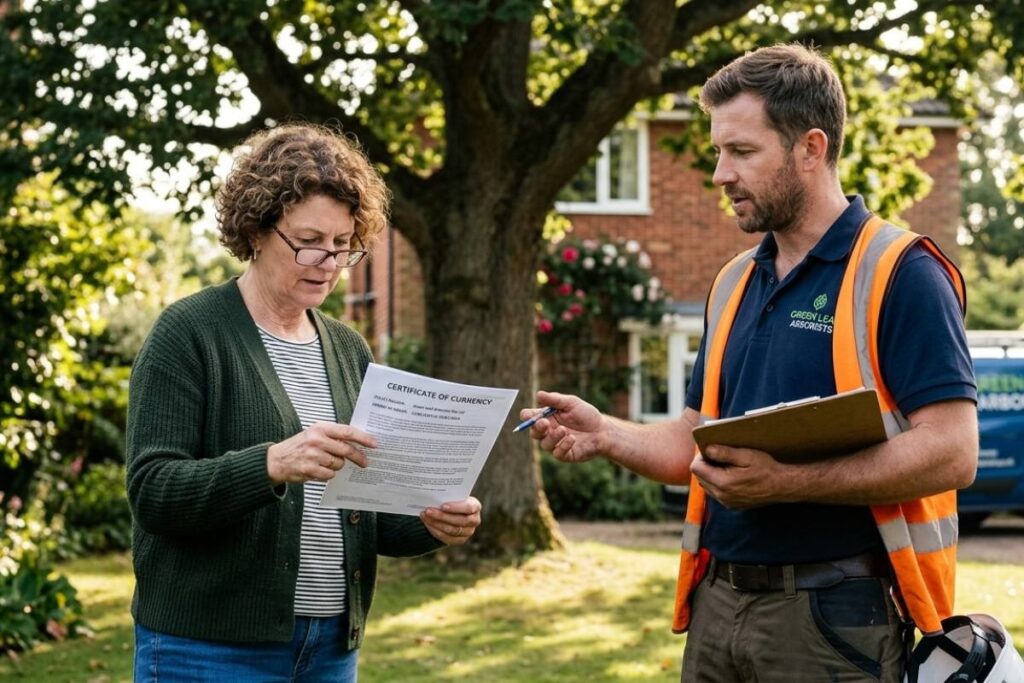
Public Liability Insurance covers damage to third-party property, your home, your car, your neighbour’s fence caused during the job. The industry standard is a minimum of $10 million coverage. Ask for a Certificate of Currency dated within the current financial year. A certificate from two years ago does not confirm the policy is still active.
Workers’ Compensation Insurance covers the crew working on your property if they are injured. Without it, an injured worker could potentially pursue a claim that implicates the property owner. SafeWork NSW explicitly lists both workers’ compensation for all workers and public liability as essential requirements when hiring tree contractors.
Some operators also carry Professional Indemnity Insurance, which is relevant if they are providing written arborist reports or consulting advice. This protects you if that advice turns out to be incorrect and causes financial loss.
Never accept a verbal assurance about insurance. Request the actual Certificate of Currency, note the policy number, and confirm the insurer directly if the job is high-value or high-risk.
Council Permits: What Approval Do You Actually Need?
In all states and territories, you may need a permit or council approval before cutting or removing a tree, especially if it is a protected species, a heritage-listed tree, a tree above a certain height, or located on a boundary with a neighbour.
Permit thresholds vary significantly between local governments, and a working understanding of tree removal laws in Australia clarifies exactly which trees fall under statutory protection before you engage any contractor.
Permit requirements vary significantly between local government areas. Here is how the major states handle it:
New South Wales
Most councils require a Development Application (DA) or a Tree Permit for the removal or substantial pruning of significant trees. The rules differ by council, species, and tree size. Some councils list exempt trees in their Development Control Plans (DCPs).
Victoria
The Planning and Environment Act 1987 and individual overlay provisions govern tree removal. Significant Landscape Overlays (SLOs) and Vegetation Protection Overlays (VPOs) protect specific trees. Contact your council’s planning department before engaging any contractor.
Queensland
Vegetation management laws and local council planning schemes both apply. Brisbane City Council, Sunshine Coast Council, and Gold Coast City Council all have published protected tree registers that arborists should be familiar with.
South Australia
The Planning, Development and Infrastructure Act 2016 applies, with regulated trees defined by trunk circumference. Regulated tree removal generally requires council development approval.
Western Australia
Tree removal on private property is largely governed at the local government level. Requirements vary considerably between councils.
Without council consent, property owners risk significant fines, often running into thousands of dollars. This applies everywhere, even if the tree owner is fully qualified. A reputable tree service will identify permit requirements during the quoting process and tell you upfront what approvals are needed. If a contractor tells you no permit is required without checking your specific council’s rules, treat that as a warning sign.
Tree Service Types: Lopping vs. Pruning vs. Removal
Understanding what you are actually asking for prevents you from getting work you do not need or, worse, work that damages your tree.
Tree Pruning
The selective removal of branches to improve structure, health, airflow, or clearance. When performed correctly to Australian Standard AS4373:2007 (Pruning of Amenity Trees), pruning extends a tree’s life and reduces long-term risk. It is the professional approach for managing the trees you want to keep.
Tree Lopping
Refers to the indiscriminate cutting of large branches or the topping of a tree’s canopy. It is widely condemned by Arboriculture Australia and most councils because it causes severe structural damage, creates decay entry points, and produces unstable regrowth. Reputable arborists do not lop trees. If a contractor leads with lopping as their primary offering, engage someone else.
Understanding the difference between an arborist and a logger helps explain why lopping, which prioritises speed over tree health, is a practice associated with unqualified operators rather than trained professionals.
Tree Removal
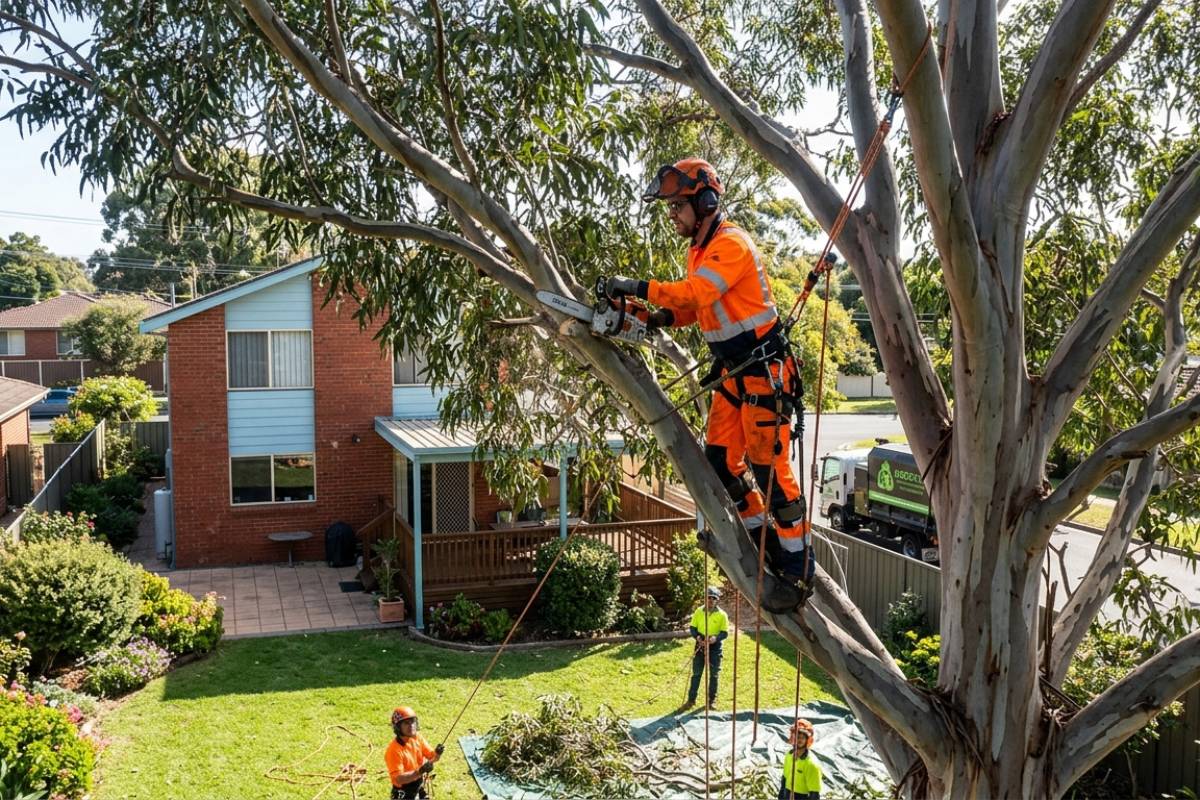
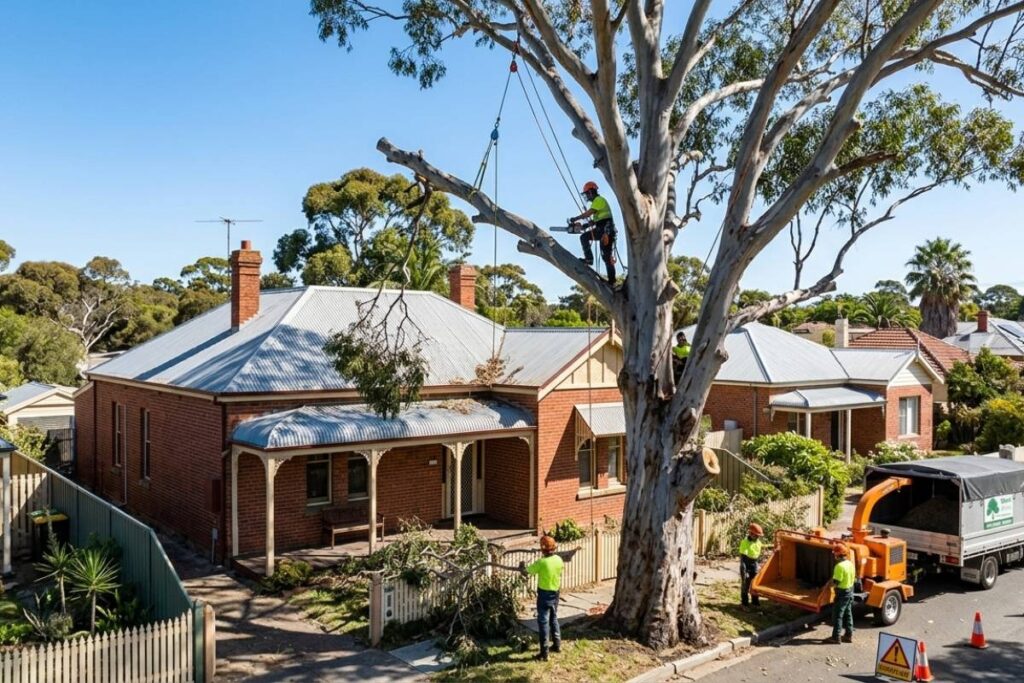
The complete felling and extraction of a tree. It requires the most skill and carries the most risk. The process typically involves sectional dismantling from the canopy down, using rigging systems to lower branches without damaging surrounding structures. Stump grinding is usually a separate, billable service.
Stump Grinding
Uses a mechanical grinder to reduce the stump to wood chips below ground level. Tree stumps are notoriously difficult to fully eliminate because grinding reduces the visible stump to wood chips but leaves the root system intact, which matters considerably if you plan to build, pave, or replant in that area.
How to Compare Quotes the Right Way
Getting three quotes is standard advice, but most people do not know how to evaluate what they are comparing. A $400 difference between quotes means nothing if one contractor is uninsured and the other is not.
When comparing quotes, confirm that each one includes:
Scope of work in writing
The quote should specify exactly which trees, which branches, whether stump grinding is included, and who is responsible for green waste removal and disposal.
Credentials attached
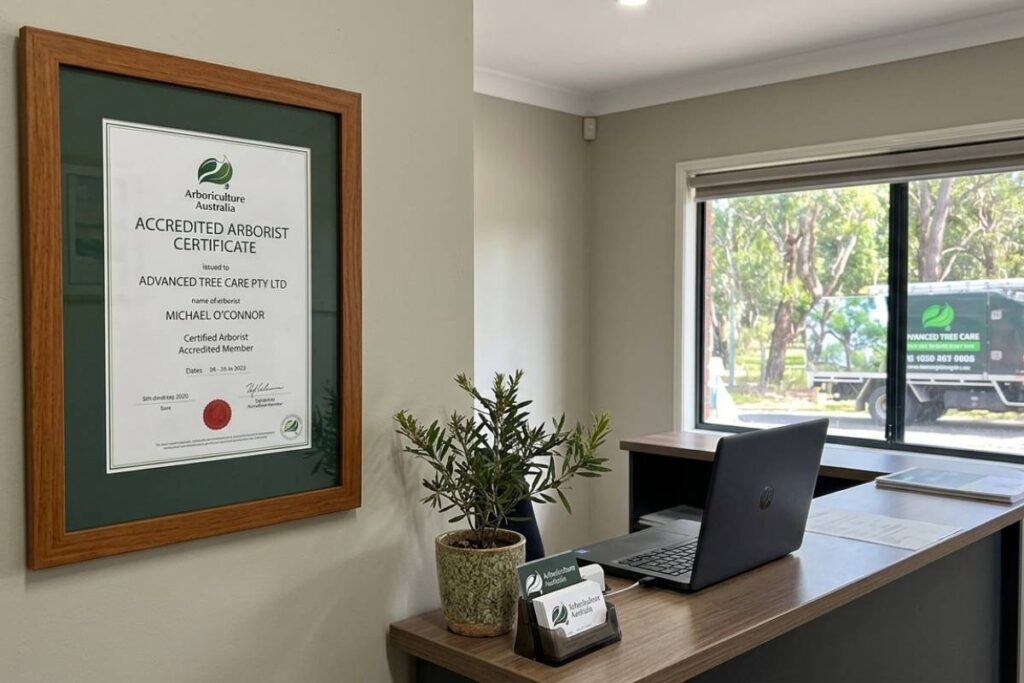
A professional operator will have no hesitation attaching a copy of their Certificate III or higher, their public liability Certificate of Currency, and their ABN.
Permit responsibility clarified
Ask explicitly who is responsible for obtaining any required council permit. Some contractors handle it as part of the job; others pass that task to the homeowner. Either is acceptable. What matters is that it is written down and assigned.
Waste disposal confirmed
Green waste, woodchips, and logs need to go somewhere. Confirm whether the contractor removes all material or whether they leave woodchips on-site (which can be useful for mulching garden beds).
Price-shop only after all of those elements are equal. A cheaper quote that omits insurance verification or skips the council permit process is not a bargain.
Red Flags That Signal an Unqualified Operator
One of the main issues in the arboriculture industry is the lack of regulation and the ability of anyone who owns a chainsaw to advertise themselves as an arborist and begin removing or pruning trees.
Knowing what to watch for protects you:
Door-knocking with an unsolicited quote: Legitimate tree companies rarely approach homeowners uninvited, claiming a tree is “dangerous.” This is a common sales tactic used by unqualified operators who rely on urgency rather than expertise.
No written quote: If a contractor will only give you a price verbally and wants cash payment, walk away.
Cannot produce an insurance certificate: Any legitimate business has these documents on file and can produce them within minutes. Delays or deflection on this point are significant red flags.
Recommends lopping as the solution: As established above, lopping is a destructive practice. A trained arborist recommends it for no healthy tree.
Offers to skip the council permit: This shifts the legal liability to you. An operator willing to bypass the permit process to make a sale faster is demonstrating that your compliance and legal exposure are not their concern.
No ABN or verifiable business identity: Search the contractor’s ABN on the Australian Business Register (abr.business.gov.au) before any money changes hands.
Questions to Ask Before You Sign Anything
Use this list when speaking to any tree service contractor:
- What AQF qualifications do your on-site crew hold, and can you provide copies?
- Can you provide a Certificate of Currency for your public liability insurance, and what is the coverage level?
- Do you carry workers’ compensation for all staff on site?
- Which trees on my property require council approval before work begins, and who will obtain that approval?
- Is this work being performed to Australian Standard AS4373:2007?
- Is stump grinding included in this quote, and does that include disposal of all green waste?
- Are you a member of Arboriculture Australia or the Tree Contractors Association Australia (TAA)?
- Will a qualified arborist be physically present on site during the work, or are they a supervisor in name only?
A contractor who cannot or will not answer these questions directly has told you what you need to know.
Conclusion
Hiring a qualified tree service in Australia requires active due diligence because no government body issues licences or vets operators on your behalf. The combination of AQF-verified qualifications, current insurance, and confirmed council permits is the minimum threshold that separates a professional tree service from a liability risk. Apply these checks consistently, and you protect your property, your neighbours, and your legal standing before a single branch hits the ground.