High commercial rents make securing spacious workplaces nearly impossible for many growing Sydney businesses.
Crowded, poorly planned environments destroy employee focus, spike stress levels, and ruin your professional brand image.
You can transform tight quarters into high-performance zones using the top trends for small office fitouts sydney in 2026.
1. Install Modular and Adaptable Furniture
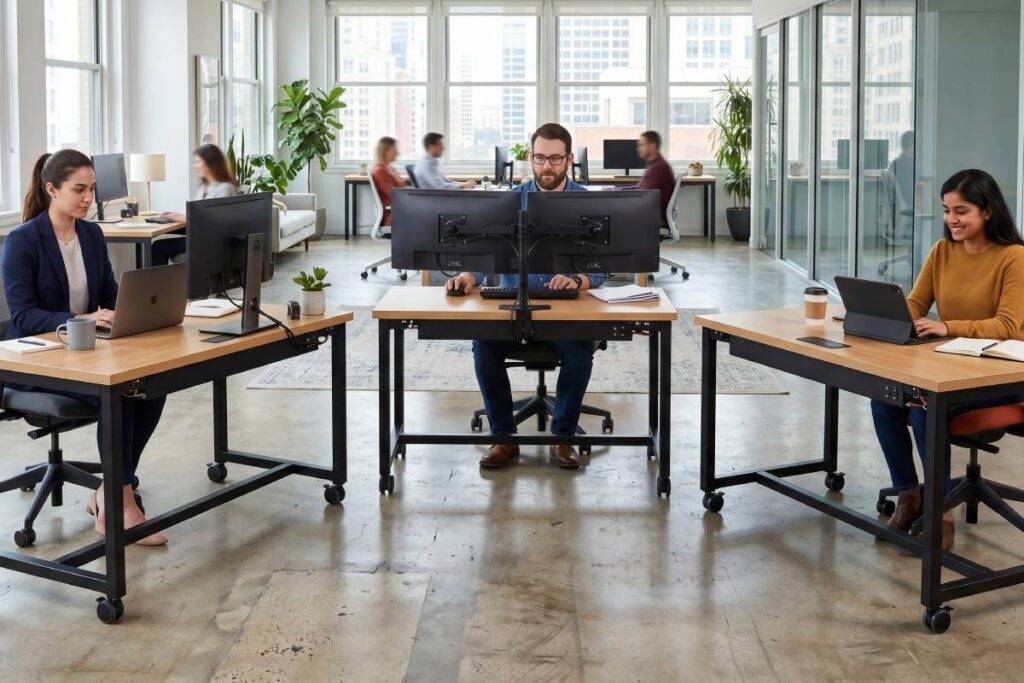
Fixed desks consume valuable square meterage. Smart businesses buy modular systems that reconfigure rapidly to serve multiple functions.
Desks transform into collaborative meeting tables within minutes.
2. Deploy Soundproof Acoustic Pods
Open plans create severe noise pollution in tight quarters. Soundproof pods provide private areas for deep work or client calls.
These self-contained units fit perfectly into dead corners and require no permanent wall construction.
3. Lease Turnkey Fitted Spaces
Companies demand immediate operational capability without suffering through lengthy construction delays.
According to a 2025 CBRE report, 97% of tenants in the Sydney CBD consider fitted space during the leasing process
Pre-fitted environments eliminate the hassle of planning an empty commercial shell from scratch.
4. Optimise Vertical Real Estate
Floor space costs a premium across the city. Clever designers build upward using floor-to-ceiling shelving and vertical storage walls.
Building safe and secure floor-to-ceiling vertical storage walls requires the expertise of commercial carpentry specialists to ensure the fixtures handle high load capacities without damaging the leased property.
This strategy clears the floor for safe movement and essential operational equipment.
5. Implement Hybrid Hot-Desking Zones
Many employees work several days a week remotely, leaving permanent desks empty.
You can support a larger team by implementing hot-desking software alongside shared workstations.
This tactic cuts your spatial footprint drastically and reduces operational overhead costs.
| Feature | Traditional Fitout | 2026 Agile Fitout |
| Workstation Style | Fixed, single-purpose desks | Adaptable, multi-purpose hubs |
| Space Required per User | 10 to 12 square metres | 6 to 8 square metres |
| Privacy Strategy | Permanent plasterboard walls | Moveable acoustic pods |
| Storage Solution | Bulky metal filing cabinets | Floor-to-ceiling vertical arrays |
6. Integrate Smart Lighting Systems
Harsh fluorescent lights make small rooms feel claustrophobic and uninviting. Smart LED systems mimic natural daylight patterns.
Ripping out outdated fluorescent tubes for automated LED networks is a strict compliance task handled by qualified industrial electricians.
Proper illumination tricks the eye into perceiving a much larger area, just as specific carpet patterns affect perceived room size to make narrow corridors feel wider.
7. Apply Space-Saving Biophilic Elements
Potted plants consume critical floor space. You must use living walls or hanging planters to bring nature indoors.
Greenery improves indoor air quality and boosts cognitive function without cluttering the main walkways.
Conclusion
Smart design choices dictate how effectively you use limited commercial real estate. You can overcome strict square meterage limits by implementing modular furniture, vertical storage, and acoustic pods. These seven strategies guarantee your workspace remains productive and agile for the future.


